SkinErr - Skincare Mobile App: A Designer's Guide to Its Visual Identity
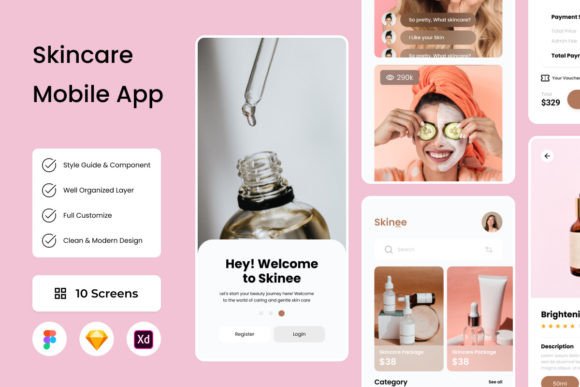
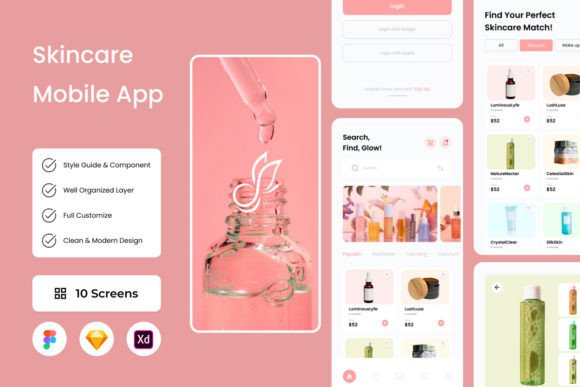
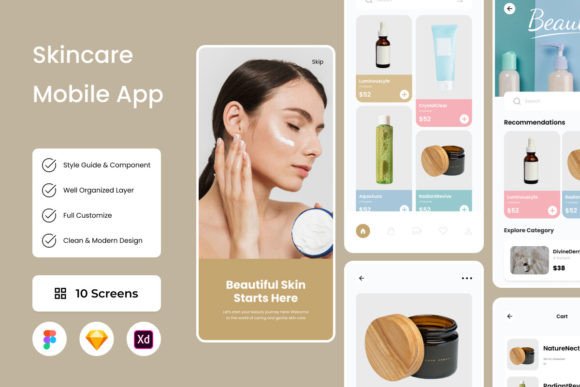
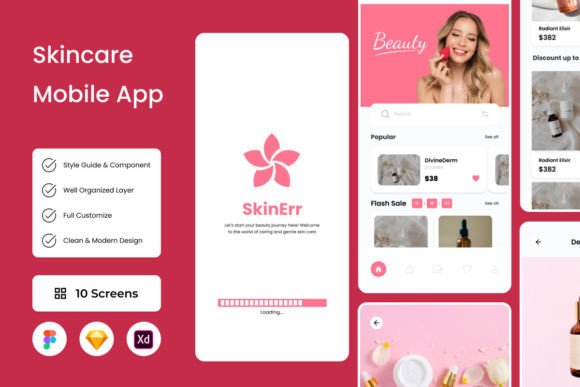
When we talk about SkinErr - Skincare Mobile App, we are discussing more than just a set of screens; we are looking at a complete visual ecosystem designed to solve real problems. As designers and creators, we know that a great user interface is invisible when it works well. This mobile app UI kit understands that principle deeply. It presents a personality that is calm, clinical yet approachable, and highly functional. The visual characteristics are defined by a clean layout structure that prioritizes content hierarchy, ensuring that skincare advice and product recommendations are the heroes of the experience.
The style here leans heavily into modern minimalism, but it avoids being cold. It uses whitespace effectively to let the design breathe, which is crucial for an app dealing with health and wellness. For the designer, entrepreneur, or small business owner looking at this, the appeal lies in its versatility. It acts as a robust design asset that doesn't just look pretty—it solves the problem of how to present complex skincare data in a digestible format. The layers are well-organized, which means you aren't just buying a static image; you are acquiring a flexible tool that respects your workflow.
Strategic Applications for Branding and Digital Presence
Understanding where SkinErr - Skincare Mobile App fits into the broader creative landscape is key to maximizing its value. While its primary function is web design and mobile interface creation, the underlying design principles make it a strong contender for brand identity projects in the beauty and wellness sectors.
If you are a marketer or brand strategist, you can use the app’s visual language to anchor a larger campaign. The consistency found within the app’s layout—its use of grids, iconography, and image placeholders—provides a solid foundation for social media graphics. Imagine pulling the color palette and layout structure from the app to create cohesive Instagram stories or Pinterest pins. This ensures that the user journey from a social ad to the actual app experience feels seamless.
Furthermore, content creators and bloggers in the beauty niche can use the high-fidelity screens as mockups for their own content strategies. It helps in visualizing how a specific piece of advice or a product review might look in a professional digital setting. The compatibility with Figma, Sketch, and Adobe XD means it integrates easily into existing agency workflows, making it a practical choice for client work where speed and quality are both non-negotiable.
The Anatomy of Usability: Design and Typography
Diving deeper into the technical execution, SkinErr - Skincare Mobile App demonstrates a strong grasp of visual hierarchy. This is not just about making things look "nice"; it is about guiding the user's eye. In a skincare app, the user needs to find solutions quickly—whether it's a remedy for blemishes or advice on fine lines. The layout facilitates this by using distinct typographic scales to differentiate between headers, body text, and calls to action.
The use of open source fonts is a particularly smart move for a template of this nature. It removes the barrier of expensive licensing for the end-user while still maintaining a high standard of modern typography. For the designer, this offers a lesson in resourcefulness. You don't always need a premium, expensive serif font or sans serif font to achieve a high-end look. It is about how you pair typefaces and manage spacing.
When evaluating this asset for your own projects, pay attention to the font pairing potential. The neutral, clean aesthetic of the app allows for versatile pairing. You could swap the default fonts for a premium font if the client requires a more distinct logo design or specific editorial design flair. For example, introducing a subtle script font for accent headers could soften the clinical feel, while a bold display font could be used for promotional banners within the app. The file structure supports this adaptability, allowing you to apply global text and color styles to transform the mood of the entire application in minutes.
Practical Integration and Licensing Considerations
For the entrepreneur or publisher, adopting a design system like SkinErr - Skincare Mobile App is a strategic business decision. The fact that the layers are neat and well-organized translates directly to cost savings in development time. A developer can easily interpret the design intent, reducing back-and-forth revisions.
When bringing this into your workflow, start by stress-testing the responsiveness. While the file includes high-quality screen layouts, you should always verify how the elements hold up when adapting for different device sizes, particularly if you are planning packaging design elements that might need to bridge the gap between physical products and the digital app interface. The consistency of the design ensures that the brand perception remains professional across all touchpoints.
It is also vital to understand the licensing. As noted, the images used in the preview are for demonstration only. This is standard practice for commercial font and asset marketplaces, but it serves as a reminder to source your own high-quality imagery. The strength of the SkinErr layout relies on good photography. The design is built to frame content, so ensure your content—whether it is user-generated reviews or professional product shots—is worthy of the frame.
Ultimately, SkinErr - Skincare Mobile App is more than a collection of screens. It is a blueprint for digital wellness. It balances aesthetic appeal with the rigorous demands of user experience, making it a valuable asset for anyone serious about creating effective digital products in the beauty space. By leveraging its organized structure and clean visual style, you can accelerate your project timeline while delivering a product that feels polished, trustworthy, and ready for the market.